Office ergonomics
Lower back pain at the desk often starts with how you sit
Published
Lower back discomfort is still the complaint we hear most in offices. It does not always mean a dramatic injury. More often, someone has spent a few months sitting on the front third of the chair, or slumped so the lower back rounds and the disc and ligament tissues take a load they are not meant to hold for hours.
We come back to the same point we use when we talk about lifting: keep a slight natural arch in the lower back, what we have long called the “power” position. That is not a military sit-up-straight posture. It is the curve your back already has when you stand at ease.
Sit back, then set the chair
If you cannot sit back against the backrest without the seat edge catching your calves, the seat is too deep, or you have pulled a cushion into the wrong place. Fix the depth, or change how you use the backrest, before you add another pillow. The lumbar support should land in the small of the back. A rolled sweater is a clue that it does not.
Feet should be supported. When they dangle, you tend to slide forward, and the lower back loses the chair. A footrest is a simple fix when the desk height forces the seat up. Crossing a leg for a whole meeting parks the pelvis on an angle. Doing it for a minute is human. Doing it all morning is a habit worth noticing.
Wallets in the back pocket, phones in the same place, and a satchel that lands in the small of the back when you sit down all tilt the pelvis. Empty the pocket when you sit. It is a small, slightly fussy piece of advice, and it is one we still give because we still see it. The same goes for a seat that is tipped backward so far you have to crunch the abdomen to reach the keyboard. Recline a little if the chair allows it, then bring the work closer rather than hanging off the front of the seat.
The desk and the reach
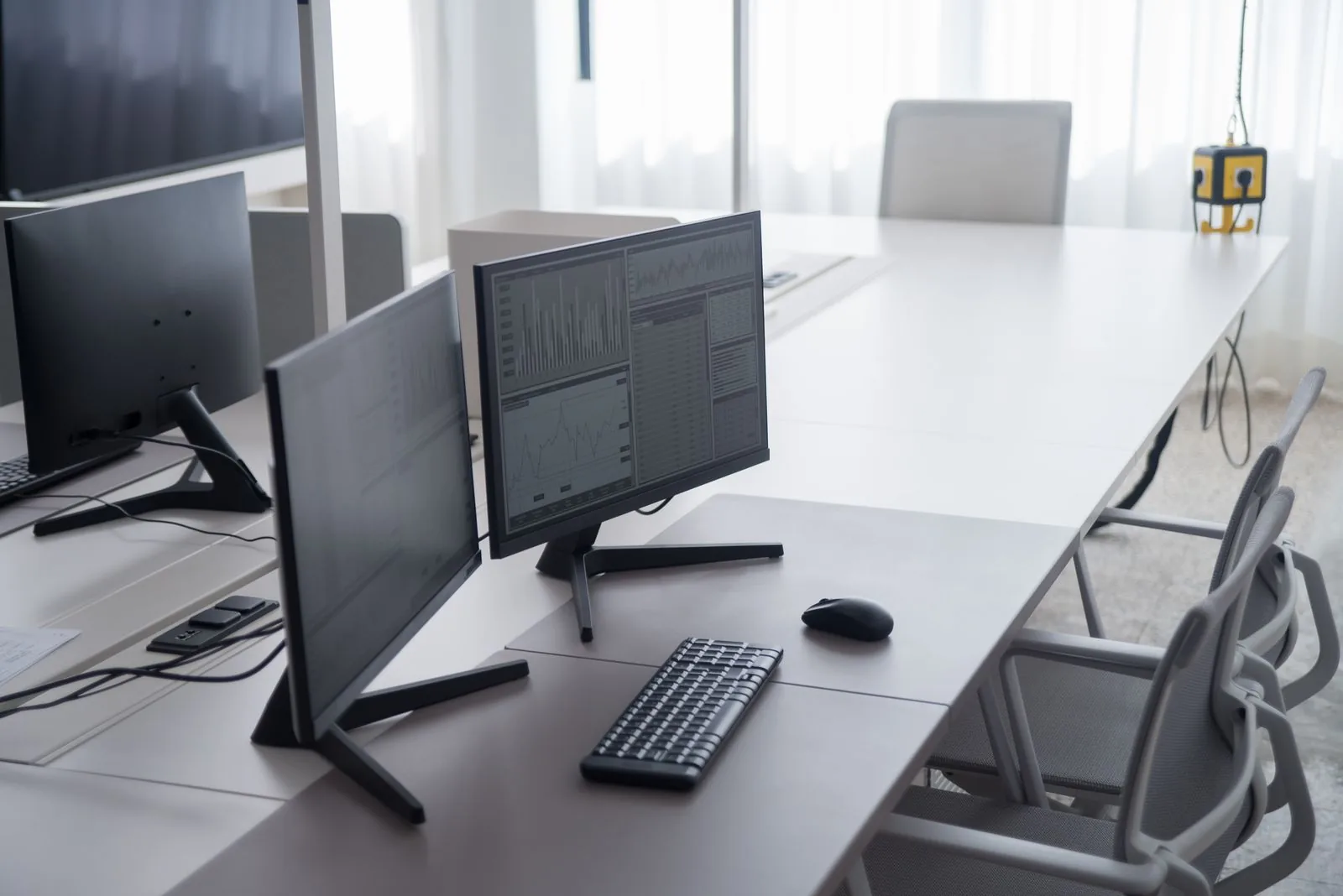
A keyboard that sits too far away pulls you into a slump. So does a monitor that is too low. Once the chair is set, bring the work to you. Elbows near the sides. Screen at about arm’s length, top at or slightly below eye level. These are the same landmarks we use in a workstation setup, and they matter as much for the back as for the neck.
Change position, even in a good chair
A well-set chair is still a static posture if you never leave it. Get up. Stand for a call. Walk to a colleague instead of sending a short message. About every 20 minutes is a reasonable target. People who have sit-stand desks sometimes assume the desk will take care of the back. It only helps if they actually change height, and if both heights are set well.
If the discomfort is sharp, travels down a leg, or follows a lift or a fall, that is a clinical question, not a chair-height question. See someone who can assess it. What we can do at the desk is reduce the awkward, sustained posture that often keeps a sore back sore.
For a whole team with the same complaint, look past the individual chair. A floor of desks that are too high, or chairs that cannot be adjusted, will keep producing the same story. That is a reason for a workplace ergonomic assessment, and often for a workstation setup workshop so the chairs you already have are actually used. If you want a hand with either, contact us.